Homeowners' pick for heating and cooling across northeast Ohio and the Western Reserve
What Belongs Around the Outdoor Unit, and What Doesn't
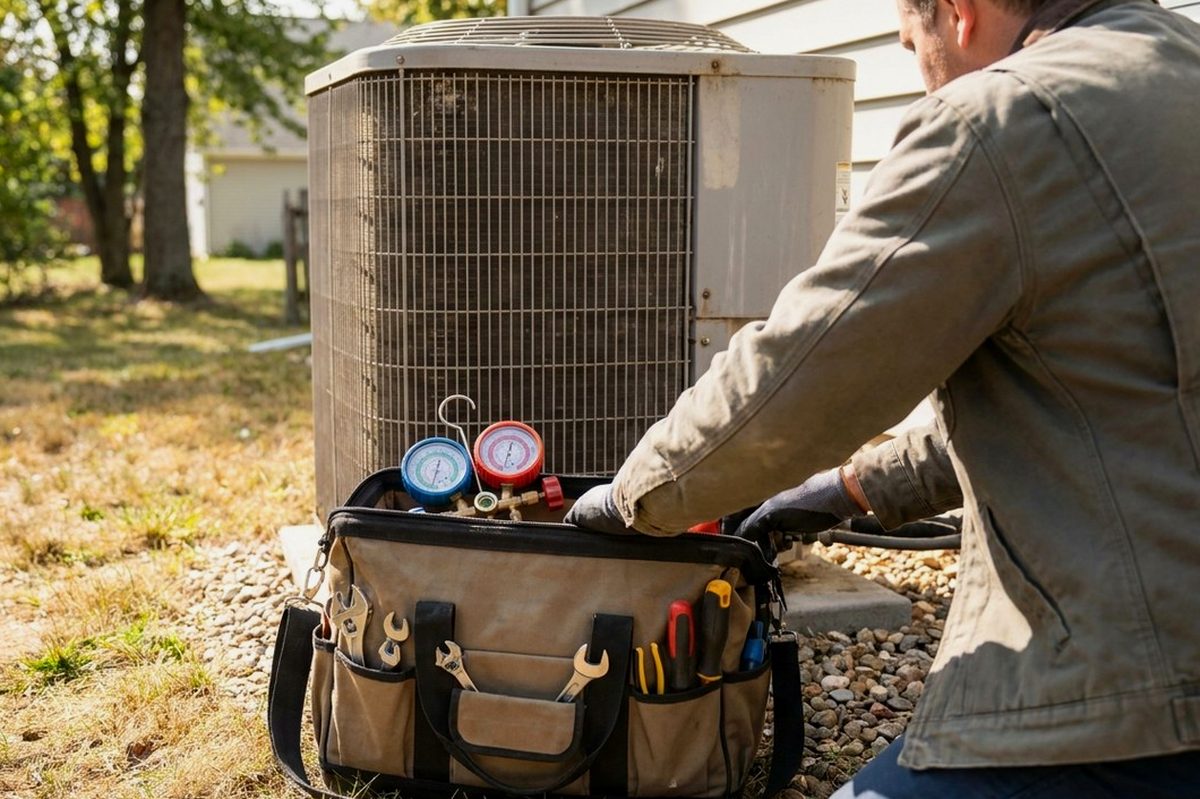
Your outdoor unit sits out back doing the hard work, and most of the year you probably do not think about it. Then a summer comes along when the AC runs and runs and the house never quite cools, or the heat pump ices up in January. Half the time the trouble is what has grown, piled, or blown up against that cabinet. Here is what belongs there and what does not.
Call (888) 414-3292- A real person answers
- Open 7 days
- Written quote before work starts
Taking calls until 5:00 PM ET
Written by the Trusted Comfort service team and checked by our field technicians
What Crowding Does to the Unit Over Time
That outdoor cabinet has one job in cooling season: dump the heat your house is carrying into the outside air. It does that by pulling air through the coil on all sides and blowing it out the top. Block a side with a shrub, a stack of firewood, or a fence panel, and the unit starts breathing its own hot exhaust. Head pressure climbs, the compressor runs hotter and longer, and the house cools slower. Do that for several seasons and you shorten the life of the most expensive part in the system. On heat pumps the same crowding traps snow and slush around the base and gets in the way of defrost drainage.
The Simple Habit: Two Feet Around, Five Feet Up
Give the unit roughly two feet of open air on every side and five feet of clear space above it. Nothing stored against the cabinet, no deck box, no bagged mulch, no bikes. Keep plantings outside that two foot line and remember shrubs grow, so measure from where the branches will be in August, not where they are in April. Overhead matters too. A low deck, a dense tree canopy, or a downspout dumping onto the top all cause problems. Air needs a straight shot up and out. A gravel or paver pad under and around the unit keeps mud and mulch from washing into the coil.
How Often to Walk Out and Look
Twice a season is plenty. Take a look in late spring before the first real cooling stretch and again in early fall, then a quick glance after any big storm. In our region the spring pass is about cottonwood fluff, maple seeds, and grass clippings packed into the coil fins. The fall pass is about leaves. Winter is its own thing for heat pump owners: after heavy snow, clear the drifts back from the sides and keep the top free so the fan is not fighting a snow cap. Pull debris out by hand or with a soft brush. Never run a pressure washer at the coil and never pry at the fins.
Things Homeowners Put There That Cause Trouble
Solid vinyl lattice or a privacy screen tight against the cabinet is the most common one we find. If you want to hide the unit, leave a real gap and use slats with open space between them. Second is the dryer-style vent or a window well exhaust aimed at the coil, which feeds it warm lint-laden air. Third is a full winter cover wrapped around the whole cabinet. A top-only cover to keep leaves out is fine on an AC that sits idle all winter, but never wrap a heat pump, and never cover any unit that might run. Also skip the mulch volcano. Mulch piled to the base holds moisture against metal and invites nesting.
Warning Signs the Clearance Problem Is Already Costing You
Call us for air conditioning repair if the unit runs almost continuously on a warm day and the house drifts two or three degrees above the setpoint by evening. Other signs: the air coming off the top of the outdoor unit feels barely warm instead of hot, the refrigerant line at the cabinet sweats heavily or frosts, the system trips a breaker in the afternoon heat, or you hear the compressor cycling off and back on in short bursts. On a heat pump in winter, ice that builds up and never clears after a defrost cycle points the same direction. You can safely clear debris around the outdoor unit and change your filter. Anything past that, electrical or refrigerant, is ours. We handle air conditioner repair, heating repair, and heat pump work for homeowners across Indiana, Kentucky, Michigan, New York, Ohio, Pennsylvania, and West Virginia.
Working the Clearance Question Into a Bigger Fix
When we come out for AC repair, one of the first things we do is walk the outdoor unit and take a reading on what it is actually breathing. If a hedge or a deck is the root cause, we will tell you plainly and show you what to cut back, because no repair holds up if the unit is still choking. Sometimes the better answer is moving the unit or the pad, and on older homes with retrofit line sets and tight side yards that is a real conversation worth having. Either way you get the honest version, including when the answer is trim the shrubs and leave the rest alone.
What Belongs Around the Outdoor Unit, and What Doesn't — straight answers
Can I plant flowers or shrubs around the outdoor unit?
Yes, as long as mature growth stays about two feet back from every side. Pick something you can keep trimmed, avoid vines entirely, and keep mulch away from the base so moisture is not sitting against the metal.
Should I cover my outdoor unit for winter?
A top-only cover to keep leaves and debris out is fine for an AC that will not run until spring. Never wrap the whole cabinet, and never cover a heat pump, since it runs all winter and needs airflow.
How do I clean the outdoor coil myself?
Shut the system off at the thermostat, then pull leaves and fluff off the outside of the coil by hand or with a soft brush and a gentle garden hose spray. Skip pressure washers and chemicals, and leave anything inside the cabinet to us.
How it works
- Step 1
Tell us the symptom
Call or fill in the quote form and describe what changed. Warm air, no air, a smell, a noise, a breaker that keeps tripping. Details on the phone shorten the visit considerably.
- Step 2
We diagnose on site
A technician checks the thermostat, airflow, electrical connections, the outdoor unit and the heat exchanger side before naming a cause. You get the finding in plain words, not a parts list you cannot read.
- Step 3
You approve the repair
We explain what failed, what it takes to fix it, and what happens if you wait. Nothing gets replaced without your say so. Most common repairs are handled the same visit.
- A real person answers
- Open 7 days
- Written quote before work starts
Why homeowners call us
- Old housing stock is normal hereBasements with converted octopus trunk lines, ducts retrofitted around joists, returns that were never sized right. We work in these houses constantly and we size the repair to the house you actually have.
- Long heating seasonsFurnaces in this region run hard from October into April, and lake effect stretches it further. We know what wear looks like at that mileage, from cracked igniters to blower motors that have been dragging for two winters.
- Cooling and heating bothOne crew for air conditioning repair and heating repair. The same ductwork moves air in July and January, so a technician who understands both sides catches problems a single-season contractor tends to walk past.
- Plain talk about repair versus replaceSometimes a part fixes it for years. Sometimes you are putting money into a system that is done. We tell you which one we think you are looking at and why, then leave the decision with you.
- All major brands, gas & electricIndependent service on Carrier, Trane, Lennox, Goodman, York and the rest.
- Straight answersNot worth fixing? We say that out loud, and often it saves you the visit fee.
About this guide
If the safe checks didn't fix it, the fault is real
Mention which checks you ran when you book; it speeds up the visit.
- A real person answers
- Open 7 days
- Written quotes
- All major brands
- Gas & electric
Rather not call? Get a free quote →